India & Its Smart Cities: What Got Built, What Works, What's Pending
Ten years into the Smart Cities Mission: 100 command centres, 7,000+ projects, Indore's clean streak, GIFT City — and the honest list of what is still pending before 2047.
By TruCitizen
15 September 2026 · 6 min read
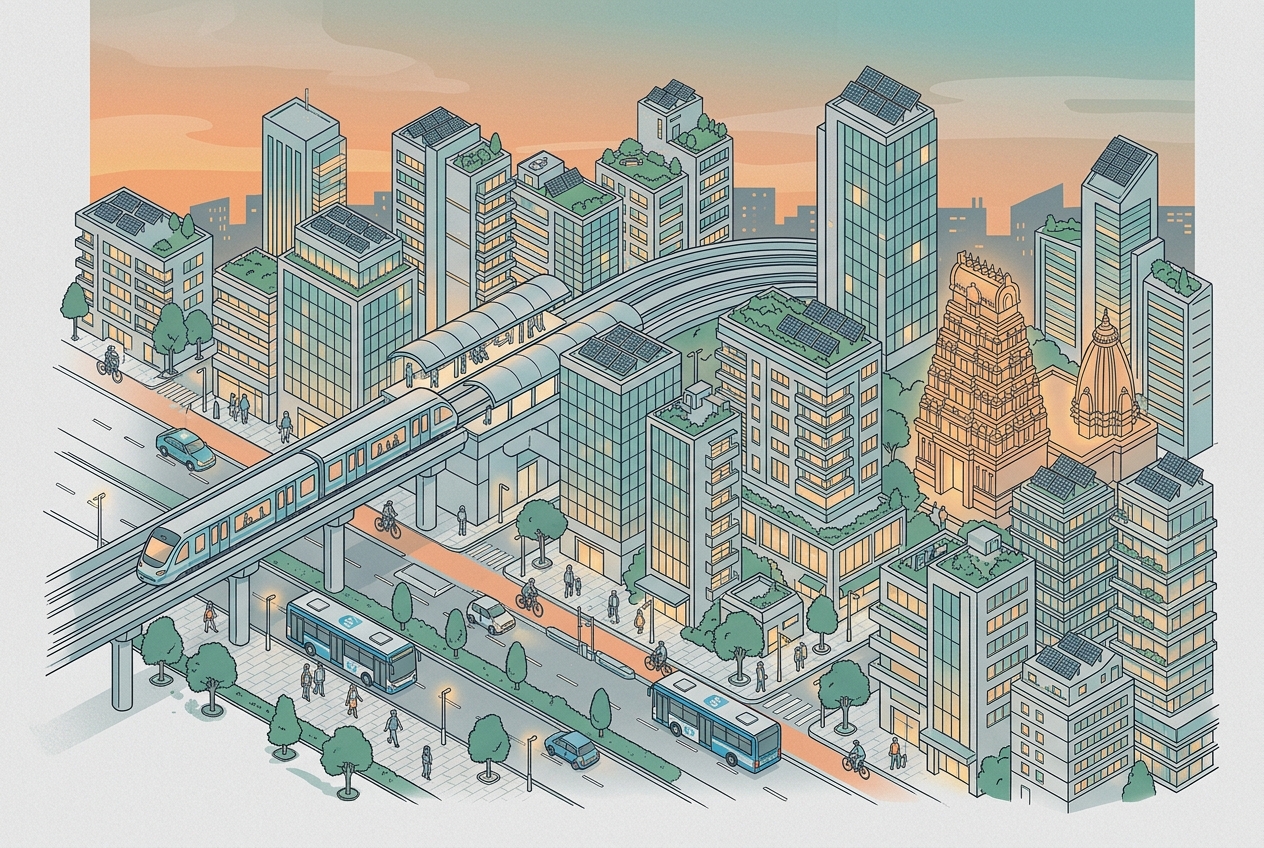
India adds roughly the population of a new Mumbai to its cities every three years. The Smart Cities Mission was launched in 2015 to make sure that growth is liveable, sustainable, and — crucially — data-driven. Ten years on, here is where things actually stand.
TL;DR
- What: A ₹2 lakh crore+ programme to upgrade 100 Indian cities with technology-led infrastructure.
- How: Integrated Command & Control Centres (ICCC), area-based development, and pan-city digital services.
- Impact: 7,000+ projects completed, 100 ICCCs live, and a template for 4,000+ towns.
- Pending: Financing, last-mile execution, and climate resilience.
What is a "smart city" in the Indian context?
Globally, a smart city uses sensors, data and connectivity to run services efficiently. In India, the Ministry of Housing and Urban Affairs (MoHUA) framed it more pragmatically: core infrastructure + clean environment + decent quality of life + smart solutions. Reliable water first, dashboards second.
The 100 cities were selected through a competitive "Smart City Challenge" between 2016 and 2018, from Bhubaneswar and Pune to Agartala and Kavaratti.
How was it built?
Special Purpose Vehicles (SPVs)
Each city created a company (SPV) jointly owned by the state and the urban local body to plan, fund and execute projects — a model borrowed from infrastructure finance to bypass slow municipal processes.
Integrated Command and Control Centres
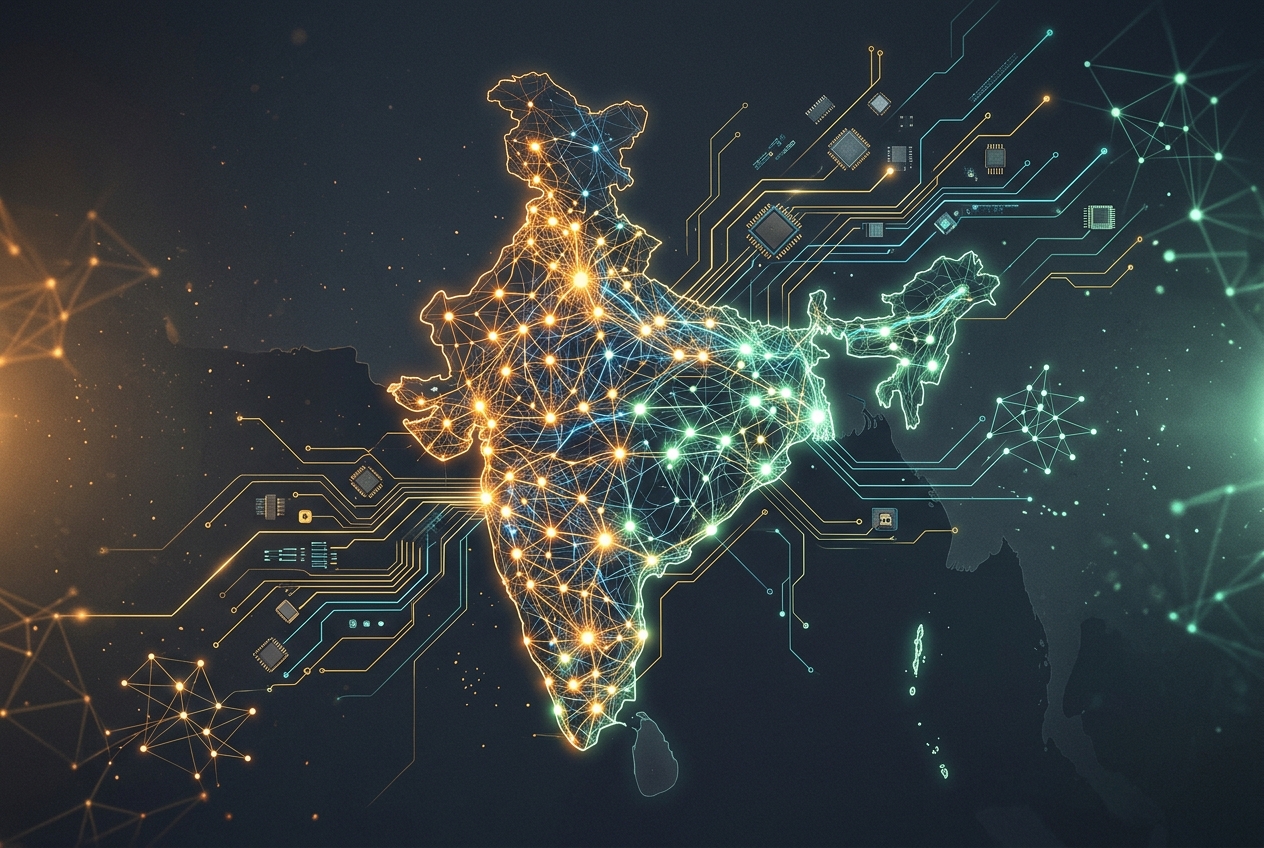
All 100 cities now run an ICCC: a "brain" that fuses CCTV, traffic signals, air-quality sensors, and emergency services. During COVID-19, these centres became war rooms for contact tracing and oxygen logistics.
Area-based development + pan-city solutions
Roughly 80% of the funding went into retrofitting or redeveloping specific neighbourhoods (smart roads, LED lighting, 24×7 water). The rest funded city-wide platforms like intelligent traffic management and e-governance apps.
Impact and growth so far
- 7,000+ projects worth over ₹1.4 lakh crore completed across the 100 cities.
- Indore has been India's cleanest city seven years in a row, powered by a data-driven waste-management model now copied nationwide.
- Surat and Pune run adaptive traffic systems that cut junction wait times by 20–30%.
- Bhubaneswar and Visakhapatnam have citizen apps for grievances that resolve most complaints within 48 hours.
- GIFT City in Gujarat is India's first operational greenfield smart city and international financial hub, with district cooling and automated waste collection.
- Spin-off programmes — Smart Cities 2.0 (CITIIS), the National Urban Digital Mission, and India Urban Data Exchange (IUDX) — are pushing open data and interoperability.
Pending targets and honest gaps
Being a TruCitizen™ means celebrating progress and naming the gaps.
- Uneven completion: A few cities have finished 90%+ of projects; others hover near 60%. Deadlines were extended to 2025.
- Financing: Municipal bonds and PPPs raised less than planned; most money still came from central and state grants.
- Beyond the 100: India has 4,000+ statutory towns. The real test is scaling ICCC-style governance to Tier-2 and Tier-3 cities at a fraction of the cost.
- Climate resilience: Urban flooding in Bengaluru, Chennai, and Gurugram shows that sensors alone don't fix drainage. Smart Cities 2.0 puts sponge-city design and heat-action plans at the centre.
- Digital divide: Citizen apps only work if everyone can use them — accessibility and Indic-language support remain patchy.
What's next: the 2047 city
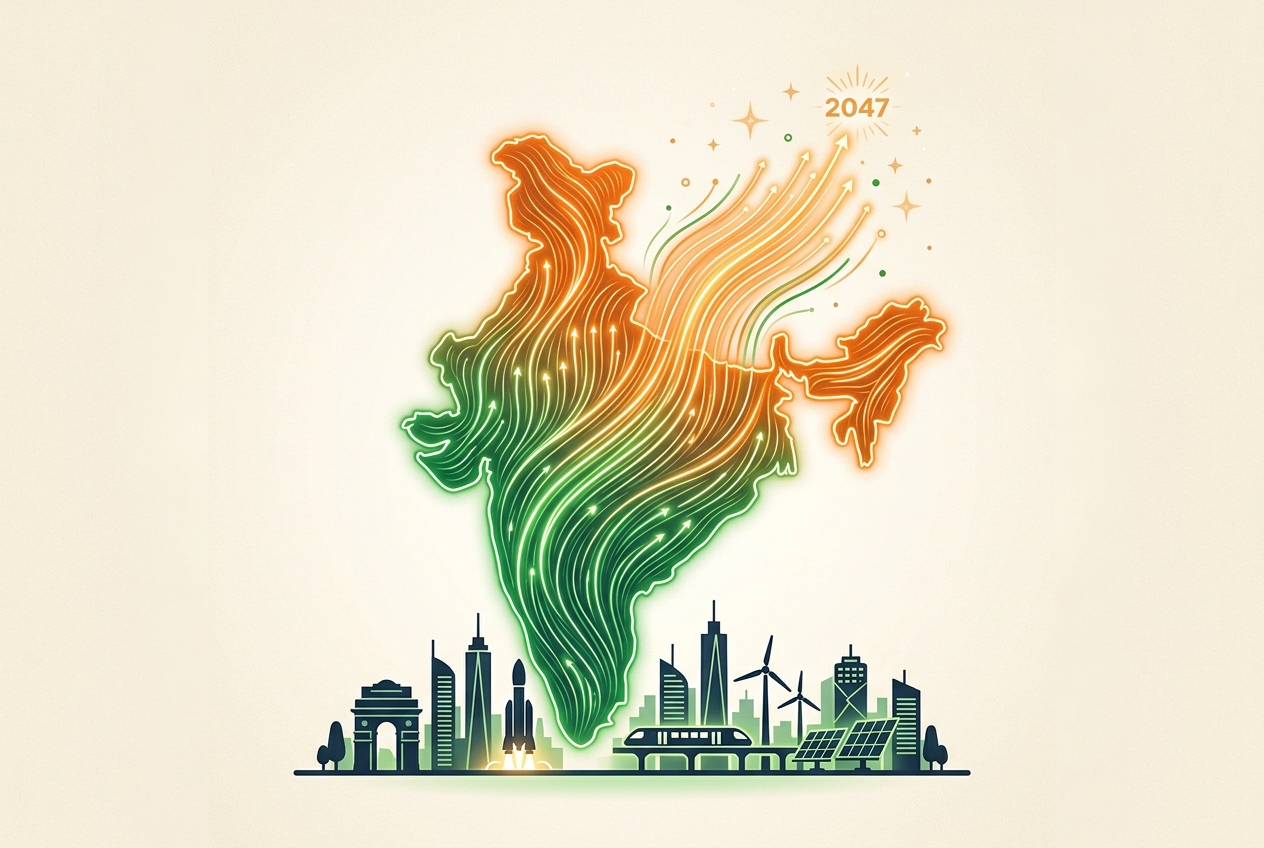
Expect digital twins (virtual replicas of a city used for simulations), AI-optimised bus routes, rooftop-solar micro-grids, and 15-minute neighbourhoods. The Union Budget's Urban Challenge Fund (₹1 lakh crore) signals a shift from "100 smart cities" to "every city, smarter".
Key takeaway
India's Smart Cities Mission delivered the plumbing — command centres, data platforms, and 7,000+ projects. The next decade is about scaling it to thousands of towns, funding it sustainably, and making cities climate-proof.
Quick answers
Frequently asked
- How many smart cities are there in India?
- 100 cities were selected under the Smart Cities Mission between 2016 and 2018; all 100 now operate Integrated Command and Control Centres.
- What is the impact of the Smart Cities Mission?
- Over 7,000 projects worth more than ₹1.4 lakh crore have been completed, including smart traffic systems, 24×7 water supply zones, LED lighting, and citizen grievance apps.
- What are the pending targets for India's smart cities?
- Uneven project completion, sustainable municipal financing, climate resilience against urban flooding, and scaling smart governance to 4,000+ towns.
Keep reading