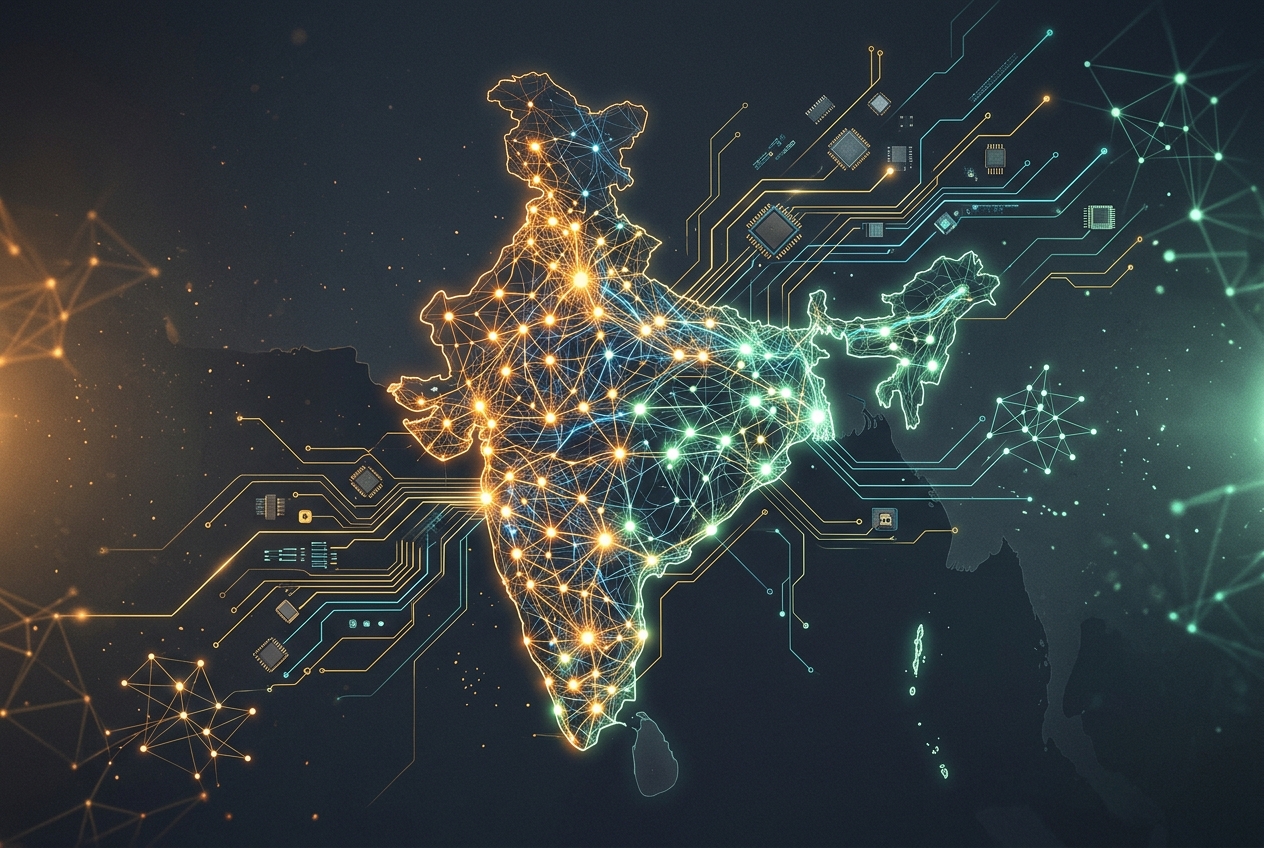
India Mission 2047: What, Who, How and Why It Matters to You
India turns 100 in 2047. Here is the plain-English guide to Viksit Bharat @2047 — what it is, who is driving it, how it will be built, and what it means for your income, health, and city.

By TruCitizen
15 September 2026 · 6 min read
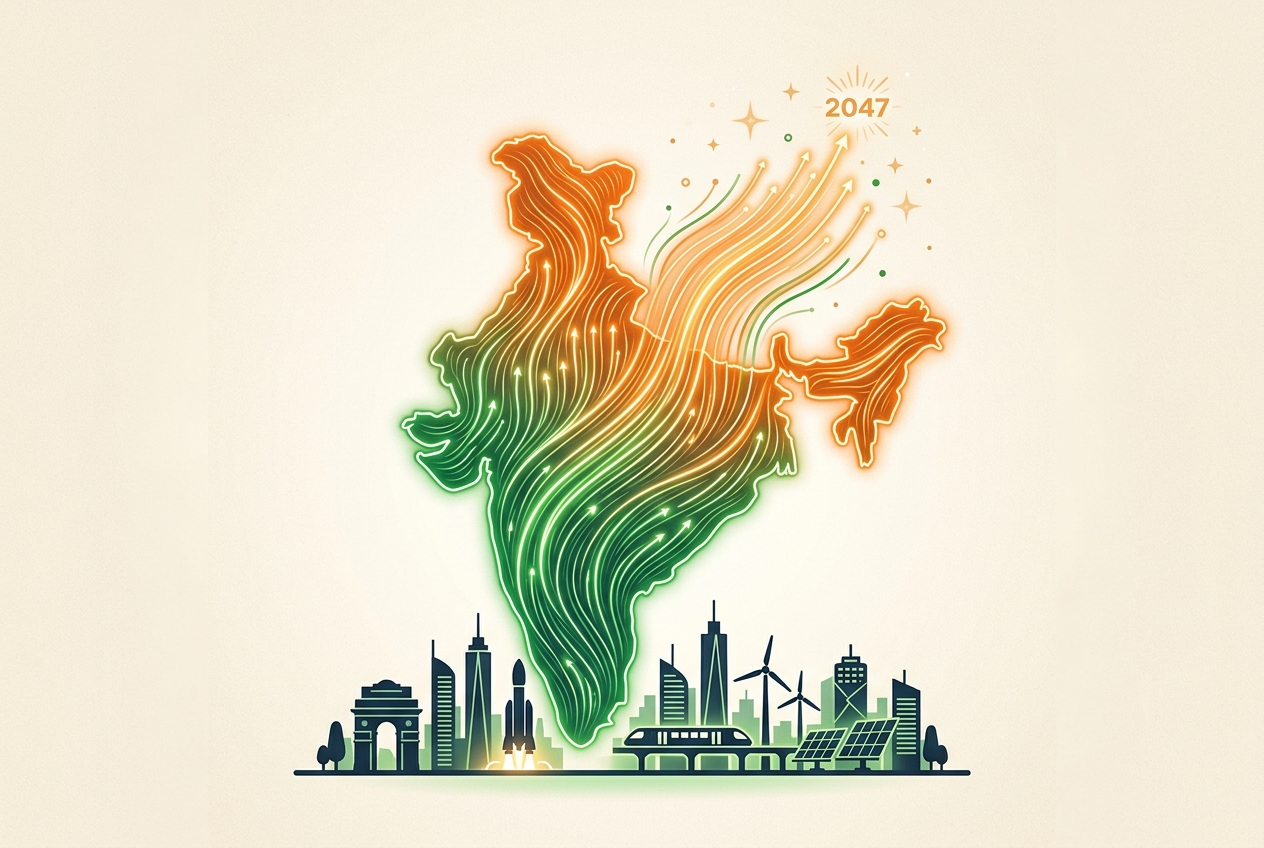
By 15 August 2047, India turns 100. Mission 2047 (officially Viksit Bharat @2047) is the national game plan to arrive at that birthday as a developed, high-income, tech-sovereign nation. Think of it less as a policy document and more as a shared deadline for 1.4 billion people.
TL;DR — The 30-second version
- What: India's roadmap to become a developed economy by its centenary of independence.
- Who: Government (NITI Aayog leads), states, industry, and most importantly Gen Z and Gen Y, who will be in their 40s and 50s in 2047.
- How: Digital public infrastructure, manufacturing, clean energy, smart cities, and skilling at scale.
- Impact: Per capita income targeted to rise from ~US$2,700 (2024) to US$18,000–20,000+, plus universal healthcare and world-class infrastructure.
What exactly is Mission 2047?
Mission 2047 is a long-range vision to transform India into a US$30 trillion economy by 2047. It bundles dozens of existing programmes — Digital India, Make in India, Smart Cities Mission, Ayushman Bharat, PM Gati Shakti, and the National Green Hydrogen Mission — under one measurable outcome: India should be classified as a high-income country by the World Bank before it turns 100.
NITI Aayog's "Vision India@2047" working papers describe ten sectoral pillars. The most Gen-Z relevant ones are technology, education, urbanisation, and climate. In other words: the jobs you'll do, the cities you'll live in, and the air you'll breathe.
Who is driving it?
- NITI Aayog coordinates the vision and tracks state-level progress.
- Union ministries own sectoral targets (MeitY for digital, MoHUA for cities, MNRE for renewables).
- States publish their own Vision 2047 documents — Uttar Pradesh, Gujarat, Karnataka and Tamil Nadu already have them.
- Industry and start-ups supply the manufacturing, semiconductors, and AI muscle.
- Citizens — this is where TruCitizen™ comes in. A mission without civic participation is just a PDF.
How does India plan to get there?
1. Digital Public Infrastructure (DPI)
Aadhaar, UPI, DigiLocker, ONDC and the Account Aggregator framework form the "India Stack". UPI alone processes more than 16 billion transactions a month, and the stack is now being exported to other countries. DPI is India's cheat code: it lets a start-up reach 500 million users without building identity or payments from scratch.
2. Manufacturing and semiconductors
Production-Linked Incentive (PLI) schemes across 14 sectors, the India Semiconductor Mission (₹76,000 crore), and fabs coming up in Gujarat and Assam aim to lift manufacturing to 25% of GDP.
3. Clean energy
500 GW of non-fossil capacity by 2030 and net-zero by 2070. India already ranks among the top four countries for installed renewable capacity.
4. Skilling the world's youngest workforce
The median Indian is around 28 years old. Skill India, the National Education Policy 2020, and the push for 1 million AI-skilled professionals under the IndiaAI Mission are about converting demographic dividend into economic dividend.
The Impact — what changes for you
Per capita income
India's per capita income is roughly US$2,700 today. The Mission 2047 target is to cross the World Bank's high-income threshold (currently about US$14,000) and reach US$18,000–20,000. That requires sustained 7–8% real GDP growth for two decades — ambitious, but it is what China did between 1990 and 2010.
Healthcare
Ayushman Bharat already covers 550+ million people with ₹5 lakh insurance. The 2047 vision targets universal health coverage, doctor-to-patient ratios above WHO norms, and a fully digital health record for every citizen via the Ayushman Bharat Digital Mission (ABDM). Expect AI-assisted diagnostics in primary health centres to be routine.
Infrastructure
Under PM Gati Shakti, India is adding highways at 30+ km per day, building 100+ new airports, and rolling out high-speed and semi-high-speed rail (Vande Bharat, Mumbai–Ahmedabad bullet train). The National Infrastructure Pipeline is a ₹111 lakh crore commitment.
Smart cities
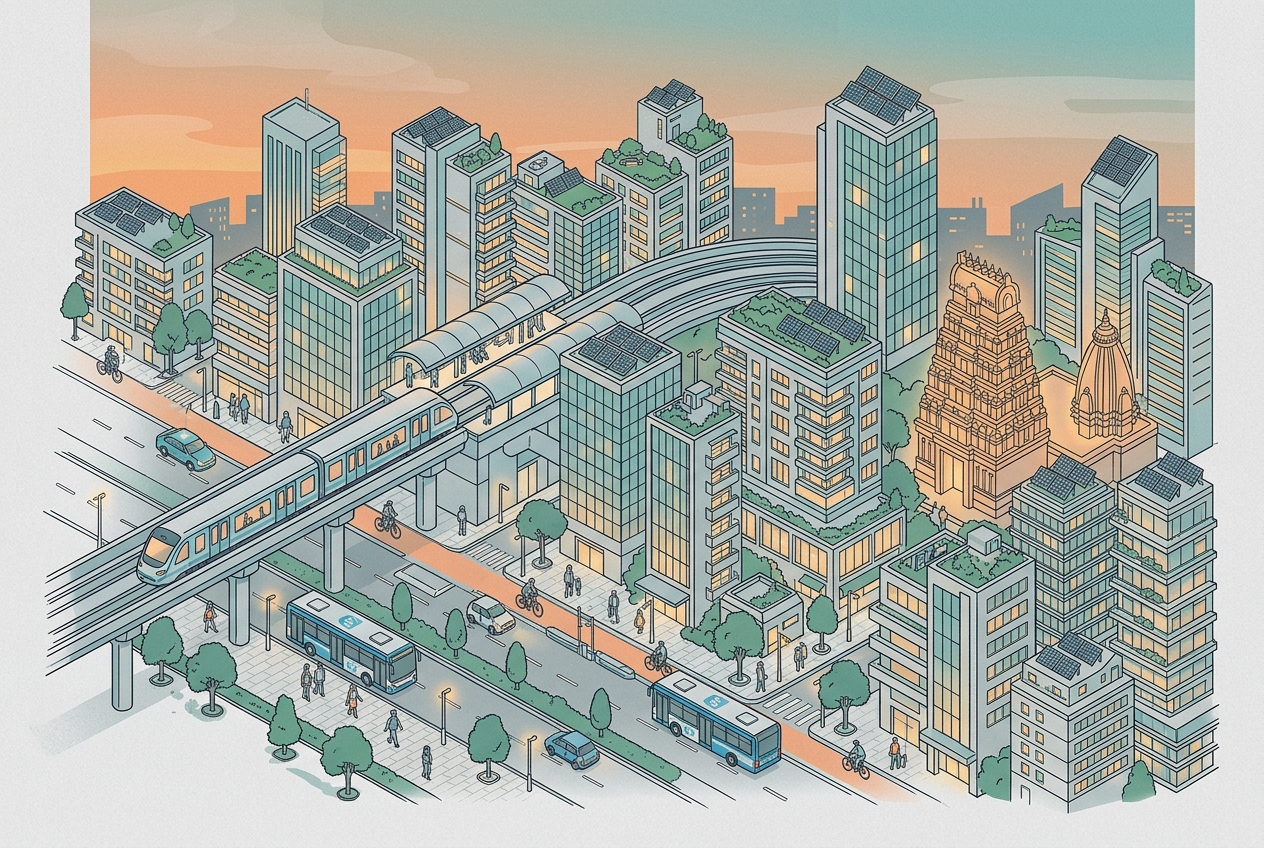
By 2047, more than 50% of Indians will live in cities. The Smart Cities Mission's 100 cities are the pilot; the next phase is scaling integrated command centres, digital twins, and green mobility to 4,000+ urban local bodies. (We wrote a whole blog on this — read it here.)
Why should Gen Z and Gen Y care?
Because the maths is simple: someone who is 22 in 2025 will be 44 in 2047. This is not your parents' mission; it is your career, your city, and your retirement fund. Every UPI payment, every vote, every start-up, and every tree you plant is a data point in the 2047 ledger.
Key takeaway
Mission 2047 is India's plan to become a developed, high-income, digitally sovereign nation by its 100th Independence Day. It succeeds only if young Indians treat it as a personal deadline, not a government slogan.
Quick answers
Frequently asked
- What is India Mission 2047?
- Mission 2047, or Viksit Bharat @2047, is India's national roadmap to become a developed, high-income economy of about US$30 trillion by its 100th Independence Day on 15 August 2047.
- What is India's per capita income target for 2047?
- The vision targets a rise from roughly US$2,700 today to US$18,000–20,000, crossing the World Bank's high-income threshold.
- Who leads Mission 2047?
- NITI Aayog coordinates the vision with union ministries, state governments, industry, and citizens each owning sectoral targets.
Keep reading